 Kilimanjaro Climbing Tours
Umbwe Route: The 6-Day Climb With Kili Slope Tours And Safaris
The Umbwe Route is the shortest and steepest path up Kilimanjaro, and this 6-day climb with Kili Slope Tours And Safaris Ltd sells on GetYourGuide at $2,242 per person. It starts with a drive from Arusha to Machame Gate for registration, then climbs from Umbwe Gate (1,614 m) up a forested ridge to a summit push at Uhuru Peak, 5,895 m (19,341 ft). All park fees, government tax, park rescue fees, meals on the mountain and airport transfers are in the price. Gear hire, tips, flights and the visa are not. This page goes through the day-by-day itinerary, what the price covers and who should pick a slower route instead. Compare it with the other Kilimanjaro climbing tours.
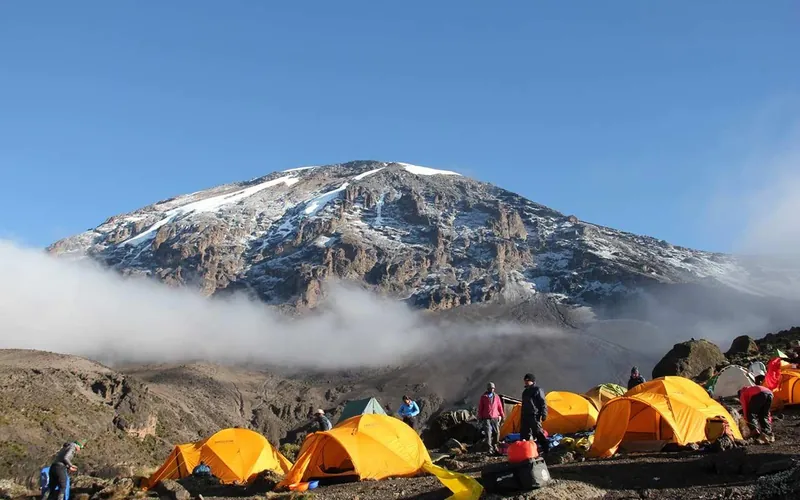
About This Tour
Kili Slope Tours And Safaris Ltd runs this 6-day Umbwe Route climb from Arusha. The Umbwe Route is described by the operator as the most physically demanding and least traveled route on Mount Kilimanjaro, and Wikipedia lists it as the shortest route on the mountain at 37 km. You climb from Umbwe Gate (1,614 m) up a steep ridge between the Lonzo and Umbwe rivers, then join the Barranco and Barafu paths for a summit attempt that starts around 23:30 on day 5.
The highest point is Uhuru Peak at 5,895 m, with Stella Point at 5,739 m on the way. The operator includes all park fees, government tax, park rescue fees, all meals on the mountain, airport transfers from Kilimanjaro International Airport and a Moshi hotel on bed and breakfast if applicable. The listing is new with no reviews yet, so check the itinerary against slower options before you commit.
$2,242, all taxes and fees included. It covers park fees, rescue fees, meals on the mountain, transfers and a Moshi hotel on B/B if applicable.
6 days, 5 nights on the mountain with a summit push on day 5.
Arusha. Day 1 is a drive to Machame Gate for registration, then on to Umbwe Gate (1,614 m).
Uhuru Peak, 5,895 m (19,341 ft), via Stella Point at 5,739 m.
International flight to Tanzania, entry visa, climbing gear (available for rent), tips to guides and porters, items of a personal nature. No mandatory extras are stated.
Free cancellation up to 24 hours before departure for a full refund. Reserve now and pay later is available.
Check Dates and Availability
Starting times are not stated on the listing, so check availability for your dates. Pickup is included, so check availability for details.
Quick answer Umbwe Route in brief
This Umbwe Route climb costs $2,242 per person and runs 6 days from Arusha to Uhuru Peak at 5,895 m. All park fees, government tax, rescue fees, meals on the mountain, airport transfers and a Moshi hotel on B/B if applicable are included. Gear rental, tips, the visa and the international flight are not. The listing is new with no reviews yet, and the route is the steepest on the mountain.
Key takeaways
- See exactly what the $2,242 covers in What the Price Actually Covers.
- Read the full day-by-day plan in The Route Day by Day.
- Six days gives less acclimatisation, so check Who This Trip Rules Out before booking.
- Compare it with the 7-day Machame Route or the 9-day Machame camping climb.
What the Price Actually Covers
The listing is unusually complete on the mountain side: park fees, rescue fees, meals, water and the crew salaries are all in. The gaps are the things you arrange before and after, so read the table and then budget for the gaps.
The Line Items
Everything in the table comes from the operator's own listing. Airport transfers from Kilimanjaro International Airport and transport between the hotel and the route entry gate are included. Accommodation is camping on the mountain with accommodation equipment supplied, plus a hotel in Moshi on bed and breakfast if applicable. A certificate of climbing, first aid and an oxygen bottle are carried.
What is left out is the standard list for Kilimanjaro: the international flight, the Tanzanian entry visa, climbing gear, which is available for rent, tips to the guides, porters and cook, and items of a personal nature. Tips are the item people forget. Nafika Tours states US$250 to US$300 per hiker on its own listing, and this operator does not state an amount, so ask before you go. The honest note here is that the listing is new with no reviews, so you cannot read reports from past climbers. GetYourGuide's platform terms still apply, including the 24-hour free cancellation.
| Line | In the price | Notes |
|---|---|---|
| Price | Yes | $2,242 per person, all taxes and fees included |
| Park fees | Yes | All park fees, government tax and park rescue fees |
| Meals on the mountain | Yes | All meals plus clean safe drinking water, hot lunch at Mweka village on the last day |
| Accommodation | Yes | Camps on the mountain, Moshi hotel on B/B if applicable |
| Transfers | Yes | Airport transfers from Kilimanjaro Airport, hotel to route entry gate |
| Crew and safety | Yes | Salaried guides, porters, cook, oxygen bottle and first aid carried |
| Climbing gear | No | Available for rent |
| Tips | No | Tips to guides and porters are excluded, no amount stated |
| Visa and flight | No | International flight to Tanzania and entry visa excluded |
| Cancellation | Yes | Free up to 24 hours before departure |
Sources: Wikipedia, Mount Kilimanjaro, UNESCO, Kilimanjaro National Park
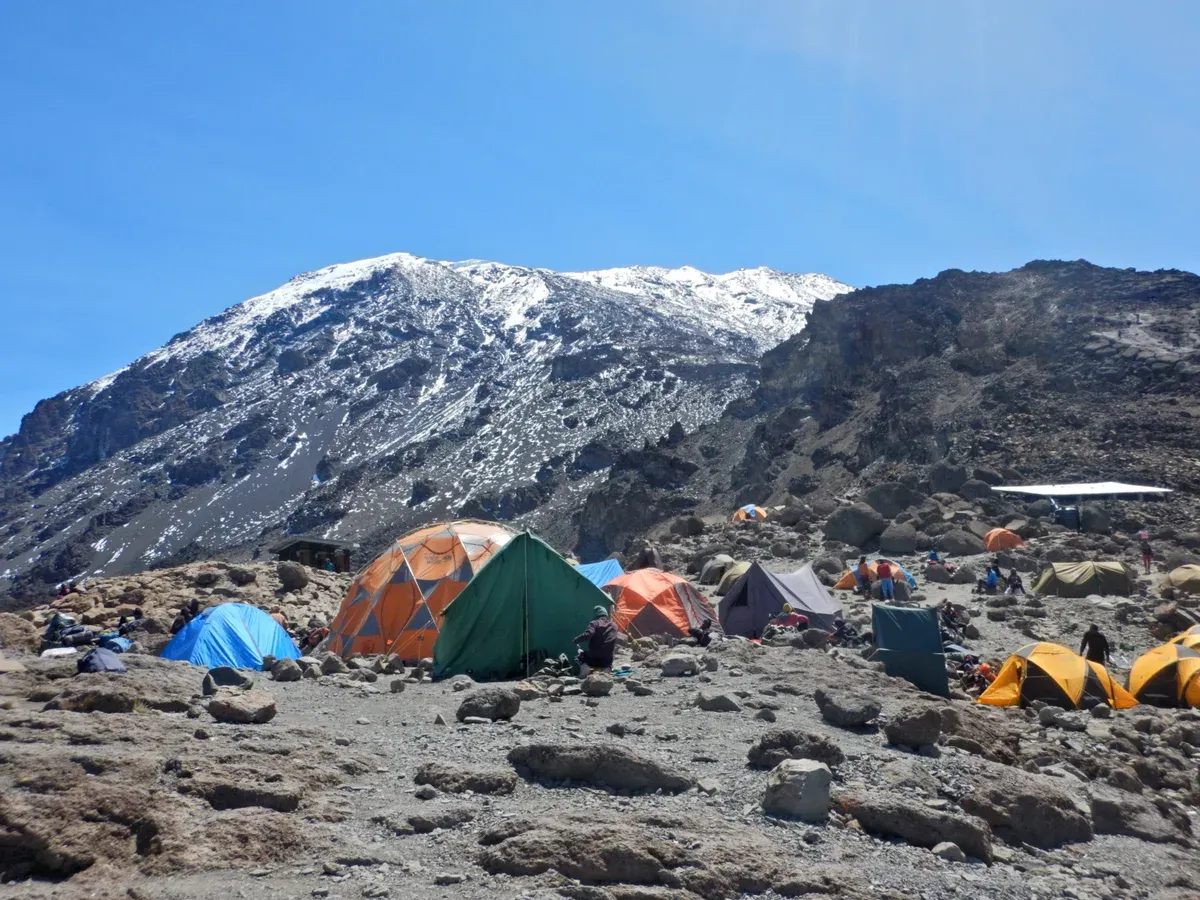
Barafu Camp. Photo: Markventure Tour Guide, CC BY-SA 4.0, via Wikimedia Commons
The Route Day by Day
The operator's itinerary runs Umbwe Gate to Umbwe Cave Camp on day 1, then Barranco, Karanga and Barafu before a summit push from around 23:30 on day 5 and a descent through Mweka Camp to Mweka Gate. Only heights the listing or researched facts give are printed.
Umbwe Gate to Uhuru Peak and Down
Day 1 starts with a drive from Arusha to Machame Gate for registration, then on to Umbwe Gate at 1,614 m. The trail passes through rainforest and coffee and banana plantations before a steep ridge climb between the Lonzo and Umbwe rivers to Umbwe Cave Camp at 2,850 m. Day 2 climbs to Barranco Camp at 3,985 m, and day 3 crosses the Great Barranco Wall, listed at 900 ft by the operator, to Karanga Camp at 4,040 m, a short day kept for acclimatisation.
Day 4 is a steady ascent to Barafu Camp at 4,681 m on an exposed ridge. Day 5 is summit night: a start of about 23:30, scree slopes to Stella Point at 5,739 m, then about 2 hours on to Uhuru Peak at 5,895 m before a descent to Barafu of about 3 hours and a walk down to Mweka Camp at 3,100 m. Day 6 is a 4 to 6 hour descent of 8.5 km through forest to Mweka Gate, then 3 km to Mweka village for a hot lunch and the drive back to Arusha. Green certificates go to Stella Point finishers and gold to Uhuru Peak finishers. Whether you reach the top depends on weather and how your body handles the altitude, and no listing can promise it.
| Day | Route | Height |
|---|---|---|
| 1 | Arusha drive, Machame Gate registration, Umbwe Gate to Umbwe Cave Camp | 1,614 m to 2,850 m |
| 2 | Umbwe Cave Camp to Barranco Camp | 2,850 m to 3,985 m |
| 3 | Barranco Camp over the Barranco Wall to Karanga Camp | 3,985 m to 4,040 m |
| 4 | Karanga Camp to Barafu Camp | 4,040 m to 4,681 m |
| 5 | Summit push from about 23:30, Stella Point to Uhuru Peak, then down to Mweka Camp | 5,739 m to 5,895 m, down to 3,100 m |
| 6 | Mweka Camp to Mweka Gate, hot lunch, drive to Arusha | 3,100 m down |
Who This Trip Rules Out
This is a demanding listing, and several limits are worth naming before you pay. If any of these apply to you, look at the alternative linked.
The Honest Limits
The route itself is the first filter. The operator calls Umbwe the most physically demanding and least traveled route on the mountain, and Wikipedia lists it as the shortest and steepest, 37 km, and labels it dangerous. The steep first days make acclimatisation harder, and this itinerary runs only 6 days. Research cited by Follow Alice puts 6-day itineraries at a 44 percent success rate in a 2006 park dataset against 64 percent on 7 days and 85 percent on 8 days, figures the same source calls unverified, so treat them as a signal and not a promise. If you want a slower profile, the Machame Route in 7 days or Lemosho in 7 days are the obvious alternatives, and the 9-day Machame camping climb gives three more days on the mountain.
The listing is new with no reviews, so there are no past climber reports to read. That does not mean anything is wrong, but it means you should read the inclusions carefully and rely on the platform terms. The from-price leaves out gear rental, tips, the visa and the international flight, so budget for them. Accommodation is camping in tents, not huts, so if you want a bed the Marangu Route is the only hut route. No minimum age or group size is stated, and wheelchair users are listed as not suitable. If any of this does not fit, browse all Kilimanjaro climbing tours and pick a different profile.
Altitude, Season and Paperwork
The practical side of a Kilimanjaro climb, from researched facts about the mountain, the park and getting to Tanzania.
Season and Acclimatisation
The dry climbing seasons run from January to mid-March and June to October according to Altezza Travel, with rains from late March to May and November to late December. The mountain is above 5,500 m at the top, which is extreme altitude in the standard definition, and the average summit temperature is about minus 7 degrees Celsius with night temperatures of minus 20 to minus 10 C in the arctic zone. Acute mountain sickness affects about 40 percent of people who ascend rapidly to 3,000 m, and it starts with a headache plus nausea, vomiting, loss of appetite or fatigue.
Severe forms are HAPE and HACE, both potentially fatal. The advice attached: walk slowly, drink water, tell your guide about symptoms and be ready to descend. Summit night is a midnight-style push from base camp at around 4,681 m here, in the dark and the cold, with only minutes at the top before descending.
Read the guide to the best time to climb Kilimanjaro and to Uhuru Peak for more.
- Dry seasons: January to mid-March and June to October
- Rains: late March to May and November
- Average summit temperature: about minus 7 C
Fees, Visa and Insurance
This tour includes all park fees, government tax and park rescue fees, which matters because the TANAPA tariff sets the Kilimanjaro conservation fee at US$70 per person per day for adults, plus camping fees of US$50 per person per night on public campsites. Park rescue cover is included, but Footslopes Tours notes it does not cover a full helicopter evacuation, so buy insurance covering trekking up to 6,000 m with evacuation. The Tanzanian embassy lists the ordinary single-entry visa at US$50 and the multiple-entry visa at US$100, applied for through the online e-visa system.
You fly into Kilimanjaro International Airport (JRO), about 40 km from Moshi and about 60 km from Arusha, and this tour picks you up there. Tips are excluded. Nafika Tours states US$250 to US$300 per hiker on its own listing, though no amount is stated here.
The pages on the cost to climb Kilimanjaro and Kilimanjaro National Park have the detail.
- Conservation fee: US$70 per person per day, paid by the operator here
- Visa: US$50 single entry, US$100 multiple entry
- Insurance: needs trekking to 6,000 m and evacuation cover
Day by Day on the Mountain
The operator's own 6-day plan, with the heights and times it states.
-
Day 1
Arusha to Umbwe Cave Camp
Drive from Arusha to Machame Gate for registration, then to Umbwe Gate at 1,614 m. The trail runs through rainforest and coffee and banana plantations, then a steep ridge between the Lonzo and Umbwe rivers. Overnight at Umbwe Cave Camp, 2,850 m.
-
Day 2
To Barranco Camp
The trail turns rocky with moss-covered trees and thinner forest, and panoramic views of Kilimanjaro open up before a descent into Barranco Valley and the Senecio Forest. Overnight at Barranco Camp, 3,985 m.
-
Day 3
The Barranco Wall to Karanga
Descend into a ravine and climb the Great Barranco Wall, listed at 900 ft by the operator, then traverse hills and valleys. This is a short day kept for acclimatisation. Overnight at Karanga Camp, 4,040 m.
-
Day 4
To Barafu Camp
A steady ascent to Barafu Ridge, an exposed and harsh stretch that needs care. Prepare your gear and rest before the summit push. Overnight at Barafu Camp, 4,681 m.
-
Day 5, from about 23:30
Summit night
Start around 23:30 and climb scree slopes to Stella Point at 5,739 m, with sunrise if the weather allows, then continue about 2 hours to Uhuru Peak at 5,895 m. Descend about 3 hours to Barafu, rest, then continue to Mweka Camp at 3,100 m.
-
Day 6
Mweka Gate and back to Arusha
A 4 to 6 hour descent of 8.5 km through forest to Mweka Gate. Collect your certificate, green for Stella Point and gold for Uhuru Peak, then walk 3 km to Mweka village for a hot lunch and drive back to Arusha.
Pros and Cons
What this listing does well and where it asks more of you.
What we genuinely like
- All park fees, government tax and park rescue fees are in the $2,242 price
- Airport transfers from Kilimanjaro Airport and gate transport are included
- All meals on the mountain, drinking water and a hot lunch at Mweka village are included
- Oxygen bottle and first aid are carried, and guides, porters and cook are salaried
- Free cancellation up to 24 hours before departure, with reserve now and pay later
The honest downsides
- Six days on the steepest route on the mountain gives less acclimatisation than 7 or 8-day climbs
- The listing is new with no reviews, so there are no past climber reports to read
- Gear rental, tips, the visa and the international flight all cost extra and no tip amount is stated
- Camping in tents throughout, with no hut option
Who it's NOT for: Not for first-time high-altitude trekkers or anyone who wants a longer acclimatisation profile, who should look at a 7-day Machame or Lemosho climb instead.
Questions About This Umbwe Route Tour
How much does this Umbwe Route climb cost?
It costs $2,242 per person with all taxes and fees included. Park fees, rescue fees, meals on the mountain, transfers and a Moshi hotel on B/B if applicable are covered, while gear rental, tips, the visa and the flight are not. See the full line-by-line in the price coverage section.
How hard is the Umbwe Route compared with other Kilimanjaro routes?
The operator calls it the most physically demanding and least traveled route on the mountain, and Wikipedia lists it as the shortest and steepest at 37 km. The first days climb fast, which makes acclimatisation harder. The overview of Kilimanjaro routes compares them.
Is 6 days enough time to acclimatise?
Six days is a short profile, and steep early days make acclimatisation harder. Research cited by Follow Alice puts 6-day itineraries at 44 percent success against 64 percent on 7 days in one unverified 2006 dataset. If you want a slower climb, read the 7-day Machame Route.
Does the price include park fees and rescue fees?
Yes, all park fees, government tax and park rescue fees are in the price. The TANAPA tariff sets the Kilimanjaro conservation fee at US$70 per person per day, so that matters. Details are in the Kilimanjaro National Park guide.
What happens on summit night?
The summit attempt starts around 23:30 on day 5 from Barafu Camp at 4,681 m, climbs scree to Stella Point at 5,739 m and continues about 2 hours to Uhuru Peak at 5,895 m. It is cold and dark, and a summit depends on weather and altitude. More in the summit and altitude section.
Is it a problem that the listing has no reviews?
The listing is new, so there are no verified climber reports yet. That means fewer first-hand accounts to read, but GetYourGuide's platform terms still apply, including free cancellation up to 24 hours before departure. You can compare reviewed climbs on the Kilimanjaro climbing tours.
What is not included that I should budget for?
The international flight to Tanzania, the entry visa, climbing gear, tips to guides and porters and items of a personal nature. Nafika Tours states tips of US$250 to US$300 per hiker on its own listing, though this listing states no amount. The page on the cost to climb Kilimanjaro breaks it down.
Prices, availability and terms are set by the operator and confirmed at checkout.
We may earn a commission if you book through one of our links, at no extra cost to you. Full affiliate disclosure