 Kilimanjaro Climbing Tours
How Long Does It Take to Climb Kilimanjaro?
How long does it take to climb Kilimanjaro? Most climbers need 5 to 9 days on the mountain, depending on the route. Wikipedia lists route durations of 9 days for the Northern Circuit, 8 for Lemosho, 7 for Machame, 6 for Marangu and Umbwe, and 5 to 6 for Rongai. This page breaks down the days by route, explains why an extra day or two raises your summit odds, and sets out how many hours you walk on a normal day and on summit night. It also shows how days drive price, because park fees are charged per day. For route-by-route detail see Kilimanjaro climbing tours and the routes guide.
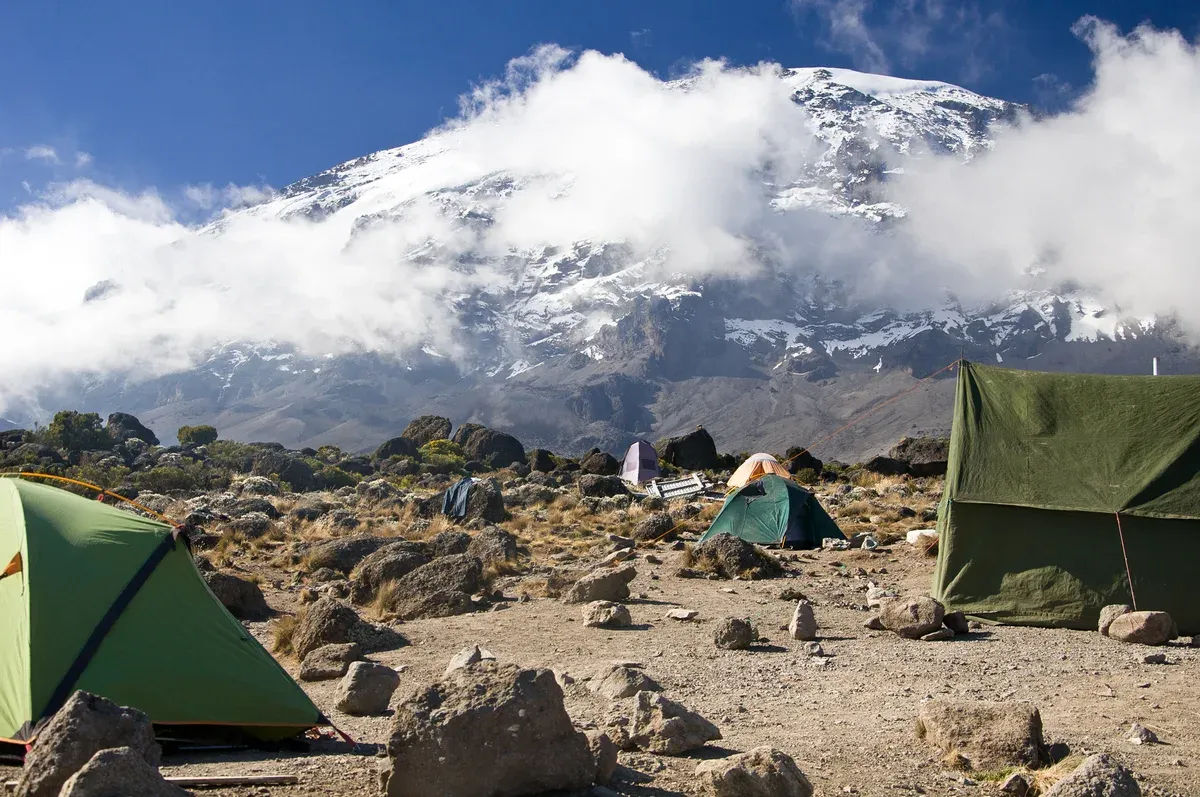
Karanga Camp. Photo: Phase9, CC BY-SA 3.0, via Wikimedia Commons
Quick answer Days on the mountain at a glance
It takes 5 to 9 days to climb Kilimanjaro. Wikipedia lists 9 days for the Northern Circuit, 8 for Lemosho, 7 for Machame, 6 for Marangu and Umbwe, and 5 to 6 for Rongai. Summit day alone runs 8 to 15 hours including the descent to a lower camp. More days mean more time to acclimatise, and operator success averages rise with the day count.
Key takeaways
- The 8-day Lemosho Route climb adds an acclimatisation day and prices at $3,200 per person.
- The 6-day Machame Route climb costs $2,350 per person.
- Success climbs with days: Duma Explorer averages 27 to 35 percent at 5 days, 80 to 85 percent at 7 and over 90 percent at 8, see why extra days matter.
- Days also drive cost, since park fees are charged per day, see the cost to climb Kilimanjaro.
Days by Route
Each route has a normal duration range, and sources disagree on the edges. Here are the published figures side by side, then the bookable climbs in the catalog sorted by days on the mountain.
Published Durations
Wikipedia's route table lists 9 days for the Northern Circuit, 8 for Lemosho, 7 for Machame, 6 for Marangu and Umbwe, and 5 to 6 for Rongai. Its tourism section gives slightly different figures of 6 to 7 days for Machame, 6 to 8 for Lemosho and 7 or more for the Northern Circuit. Operators sell the Northern Circuit at 8 to 10 days, with Altezza Travel calling it the longest and newest route at a minimum of 8 days. No TANAPA minimum-days rule was found in the sources read, so operators set their own minimums, listed by Jewel Safaris as 5 days for Marangu, 6 for Machame and Rongai and 8 for Lemosho. Full stage-by-stage detail lives in the Kilimanjaro routes guide.
Route length and days are linked. Wikipedia gives 90 km for the Northern Circuit, 56 km for Lemosho, 49 km for Machame, 64 km for Marangu, 65 km for Rongai and 37 km for Umbwe, while Much Better Adventures lists 88 km for the Northern Circuit, 67 km for Lemosho, 61 km for Machame, 70 km for Marangu, 74 km for Rongai and 48 km for Umbwe. The counts depend on whether the descent is included. Marangu, for example, is 64 km per Wikipedia, 70 km per Much Better Adventures and 73.5 km total per Climb Mount Kilimanjaro.
| Route | Days | Source |
|---|---|---|
| Northern Circuit | 9 (Wikipedia table), 8 to 10 per operators | Wikipedia, Altezza Travel, Duma Explorer |
| Lemosho | 8 (Wikipedia table), 6 to 8 (tourism section) | Wikipedia |
| Machame | 7 (table), 6 to 7 (tourism section) | Wikipedia |
| Marangu | 6 | Wikipedia |
| Umbwe | 6 | Wikipedia |
| Rongai | 5 to 6 (Wikipedia), 6 to 8 per operators | Wikipedia, Altezza Travel, Much Better Adventures |
Catalog Climbs by Days on the Mountain
The table below lists the bookable climbs sorted by days on the mountain, with the card price per person. Read the inclusions before comparing on price alone. The Marangu Route 5 Days Budget climb at $1,350 does not include a hotel night in Moshi, and the listing for the Machame Route 7 Days private climb at $2,425 does not say whether park fees are in the price, so ask the operator what the price covers.
A 3-day trek to Horombo Hut and one-day hikes exist but do not reach the summit, so they are not climbs of Kilimanjaro in the usual sense.
| Tour | Days on the mountain | Price per person |
|---|---|---|
| Marangu Route 5 Days | 5 | $2,402.60 |
| Marangu Route 5 Days Budget | 5 | $1,350 |
| Umbwe Route 6 Days | 6 | $2,242 |
| Machame Route 6 Days | 6 | $2,350 |
| Machame Route 7 Days | 7 | $2,425 |
| Lemosho Route 7 Days | 7 | $3,959 |
| Lemosho Route 7 Days Budget | 7 | $1,960 |
| Rongai Route 7 Days | 7 | $3,993 |
| Rongai Route 7 Days Budget | 7 | $2,000 |
| Lemosho Route 8 Days | 8 | $3,200 |
| Northern Circuit Route 8 Days | 8 | $4,554 |
| Machame Route 9 Days Camping | 8 nights over 9 days | $2,455 |
Why Longer Climbs Cost More
Kilimanjaro park fees are charged per person per day, so a longer itinerary on the same route carries more fees. The official TANAPA tariff booklet running to 30 June sets the conservation fee at US$70 per person per day for non-East African citizens aged 16 and over, public camping at US$50 per night, Marangu huts at US$60 per night and a rescue fee of US$20 per trip, all excluding 18 percent VAT. Altezza Travel charges park days per route as 6 to 8 for Lemosho, 6 or 7 for Machame, 5 or 6 for Marangu, 6 or 7 for Rongai, 6 or 7 for Umbwe and 10 for the Northern Circuit.
Footslopes Tours estimates total park fees at US$800 to US$1,500 per person depending on days and route.
Sources: Wikipedia, Much Better Adventures
Why Extra Days Matter
Days on Kilimanjaro are mainly about acclimatisation. The body needs time to adjust as you sleep higher each night, and the success data shows it clearly.
Acclimatisation and Sleeping Altitude
Wikipedia says sleeping altitude should not rise by more than 300 m (1,000 ft) per day at high altitude. Summit night breaks that rule, because the summit push starts from base camps at around 4,600 to 4,800 m per Follow Alice and tops out at Uhuru Peak, 5,895 m (19,341 ft). Wikipedia also notes that the Machame practice of climbing to Lava Tower at 4,630 m and sleeping lower at Barranco at 3,976 m may delay acute mountain sickness but does not prevent it.
Altezza Travel schedules short acclimatisation hikes each afternoon, such as 200 to 300 m of gain towards Lava Tower after reaching camp, and says the guide may skip Lava Tower for a porter trail topping out near 4,400 m if someone is not acclimatising. Adventure Consultants says most people begin to feel altitude effects above 3,500 m and monitors every climber daily.
Success Rate by Days
Duma Explorer averages summit success by itinerary length at 27 to 35 percent for 5 days, 50 to 73 percent for 6, 80 to 85 percent for 7, over 90 percent for 8 and 90 to 95 percent for 9. These are operator estimates, and Duma itself says operator success rates are self-reported and unaudited. A 2006 park-authority dataset quoted by Follow Alice tells a similar story, with 27 percent success on 5-day itineraries, 44 percent on 6-day, 64 percent on 7-day and 85 percent on 8-day climbs, though Follow Alice says that dataset is unverified and not updated.
Wikipedia gives an overall average of 70 to 80 percent of roughly 50,000 trekkers a year succeeding, while the same 2006 dataset puts the overall rate at 45 percent. Much Better Adventures says a 7-day Machame has a much higher success rate than a 6-day one.
| Days | Success per Duma Explorer | Success per 2006 dataset (Follow Alice) |
|---|---|---|
| 5 | 27 to 35 percent | 27 percent |
| 6 | 50 to 73 percent | 44 percent |
| 7 | 80 to 85 percent | 64 percent |
| 8 | over 90 percent | 85 percent |
| 9 | 90 to 95 percent | not stated |
Altitude Sickness on Short Itineraries
The illness figures come from Lemosho, Machame and Marangu studies, not from a comparison of itinerary lengths. Wikipedia reports a retrospective study of 917 Lemosho or Machame climbers in which 70.4 percent had acute mountain sickness, and a July and August 2005 study in which 77 percent of climbers had AMS and only 61.3 percent reached the summit. Wikipedia defines acute mountain sickness as starting with a headache plus nausea, vomiting, loss of appetite or fatigue, and lists HAPE as fluid in the lungs and HACE as swelling of the brain, both potentially fatal, with immediate descent the only definite treatment for severe cases.
Preventive acetazolamide at 125 mg twice daily may help people ascending rapidly to sleeping altitudes above 2,700 m, per the CDC as cited on Wikipedia, and operators including Altezza Travel advise confirming Diamox with a family doctor before the trip. Marangu has an optional acclimatisation day at Horombo Hut, at about 3,720 to 3,760 m, built into its hut schedule.
Sources: Wikipedia, Follow Alice
Hours on the Trail
Days are one thing, hours are another. Here is what a walking day looks like and how summit night stretches it.
A Normal Trekking Day
Most days are shorter than people expect. Operators quote Machame Gate to Machame Camp as 11 km in 5 to 7 hours, though one operator gives about 18 km for the same stage, so stage lengths are disputed. On Marangu, Wikipedia's outline runs Marangu Gate at about 1,800 to 1,860 m to Mandara Hut at 2,743 m, then Horombo Hut at 3,760 m, then Kibo Hut at 4,730 m, each a day's walk with an optional rest day at Horombo.
Altezza Travel's afternoon acclimatisation walks add 200 to 300 m of gain. Operators quote the first Machame stage at 5 to 7 hours, and the sources read give no single figure for every day.
Summit Night Hours
Summit day is the long one. Altezza Travel states the Machame summit day covers 15 km and takes 8 to 12 hours. Nafika Tours wakes climbers at midnight for tea, takes 4 to 5 hours to Stella Point at sunrise, walks about one hour from Stella Point to Uhuru Peak, and quotes 12 to 15 hours of hiking on summit day including the descent to Millennium Camp.
Follow Alice schedules an 11:00 pm wake-up and a midnight start with Uhuru Peak about 30 minutes after sunrise at Stella Point, and says to expect only about 15 minutes at the summit before turning around. On Rongai, Zara Tours wakes climbers around midnight and reaches Gillman's Point at 5,681 m after about six hours. On Marangu, Zara Tours leaves at 1 AM and reaches Uhuru Peak by about 9 AM.
SummitClimb says the summit climb takes 6 to 10 hours depending on fitness plus 2 to 4 hours on the final ascent. The timings are operator-specific and vary with fitness and weather.
| Item | Hours | Source |
|---|---|---|
| Machame Gate to Machame Camp, 11 km | 5 to 7 | Operators |
| Machame summit day | 8 to 12 over 15 km | Altezza Travel |
| Summit day including descent to Millennium Camp | 12 to 15 | Nafika Tours |
| Start to Stella Point | 4 to 5 | Nafika Tours |
| Stella Point to Uhuru Peak | about 1 | Nafika Tours |
| Time at the summit | about 15 minutes | Follow Alice |
| Rongai start to Gillman's Point | about 6 | Zara Tours |
The Daytime Summit Alternative
Wikipedia says the Lemosho Western Breach variant avoided the six-hour midnight summit ascent used on other routes. It is not an option for planning today. Wikipedia lists the Western Breach as closed and the closure took effect on 20 January 2024, with nothing newer found in the sources read.
The climbs sold on this site therefore use the standard night summit. Mweka Gate, where the descent routes exit, sits at about 1,630 to 1,640 m.
Sources: Wikipedia, WeTravel operator itineraries
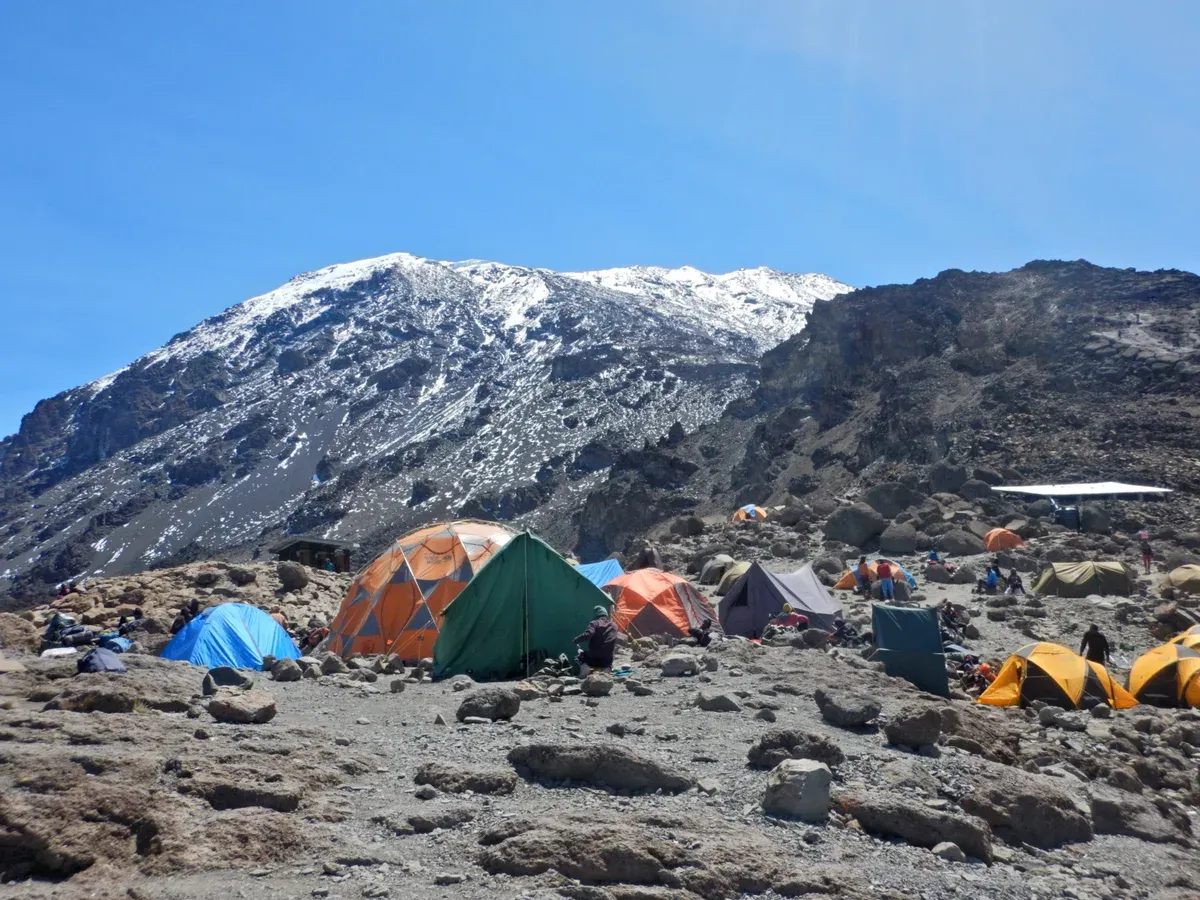
Barafu Camp. Photo: Markventure Tour Guide, CC BY-SA 4.0, via Wikimedia Commons
Tips on Trip Length
Do
- Do pick at least 7 days if you want a realistic chance, because Duma Explorer averages 80 to 85 percent success at 7 days against 27 to 35 percent at 5.
- Do add the acclimatisation day at Horombo Hut if you climb Marangu, because Wikipedia lists it as an option and Marangu has the lowest summit success rate of the routes per Climb Mount Kilimanjaro.
- Do book the 8-day Lemosho if your budget allows, because it adds an acclimatisation day and Follow Alice's quoted 2006 dataset shows 85 percent success at 8 days versus 64 percent at 7.
- Do keep 4 litres of water a day on the longer schedule, because Altezza Travel tells climbers to drink over 4 litres daily and to avoid alcohol and caffeine.
- Do plan the descent days into your total, because Nafika Tours quotes 12 to 15 hours of hiking on summit day including the descent to Millennium Camp, then a couple of hours to Mweka Gate the next day.
Don't
- Don't book a 5-day itinerary to save money without understanding the odds, because the 2006 park-authority dataset quoted by Follow Alice puts 5-day success at 27 percent.
- Don't assume the shortest route is easiest, because Umbwe is Wikipedia's shortest and steepest route at 37 km and Duma Explorer puts its success at only 60 to 70 percent.
- Don't plan around the Western Breach daytime ascent, because Wikipedia lists the route as closed since 20 January 2024.
- Don't judge duration by catalog trip length alone, because several listings count hotel and travel days, for example 9 days total with 7 on the mountain for the Lemosho Route 7 Days climb.
Questions About Kilimanjaro Climb Duration
How many days do you need to climb Kilimanjaro?
Five to nine days depending on route. Wikipedia lists 9 days for the Northern Circuit, 8 for Lemosho, 7 for Machame, 6 for Marangu and Umbwe and 5 to 6 for Rongai, and operators sell the Northern Circuit at 8 to 10 days. The full routes comparison is in the Kilimanjaro routes guide.
What is the minimum number of days allowed on Kilimanjaro?
No park minimum was found in the sources read. Operators set their own minimums, listed by Jewel Safaris as 5 days for Marangu, 6 for Machame and Rongai and 8 for Lemosho, and the shortest summit climbs in the catalog are 5-day Marangu trips such as the Marangu Route 5 Days at $2,402.60 per person.
How many hours do you hike each day on Kilimanjaro?
Operators quote the 11 km first stage from Machame Gate to Machame Camp at 5 to 7 hours, and the sources read give no single figure for every day. Summit day is far longer, at 8 to 12 hours on Machame per Altezza Travel and 12 to 15 hours of hiking including the descent per Nafika Tours.
Do more days really improve your chance of reaching the summit?
The data says yes, though it is unaudited. Duma Explorer averages 27 to 35 percent success at 5 days, 80 to 85 percent at 7 and over 90 percent at 8, and the 2006 park-authority dataset quoted by Follow Alice shows the same upward trend. Acclimatisation science and the illness figures sit behind those numbers on the Uhuru Peak guide.
Why does a longer Kilimanjaro climb cost more?
Park fees are charged per person per day. The 2023 to 2026 TANAPA tariff sets the conservation fee at US$70 per day for adults, camping at US$50 per night and Marangu huts at US$60 per night, plus 18 percent VAT, so each extra day adds a conservation fee and a camping or hut night. The full breakdown is in the cost to climb Kilimanjaro guide.
Can a beginner climb Kilimanjaro, and how long should they take?
The sources read do not set a fitness threshold, but a beginner should favour the longest itinerary they can afford, because success rises from about 27 to 35 percent at 5 days to over 90 percent at 8 per Duma Explorer. An 8 or 9-day route such as the Northern Circuit Route 8 Days at $4,554 per person is one of the longest climbs in the catalog.