 Kilimanjaro Climbing Tours
Moshi Tanzania: The Base Town for Kilimanjaro Climbs
Moshi Tanzania is the town where many Kilimanjaro climbing tours begin and end. This guide covers what the town is, why operators base climbs here, how far the gates are, where you sleep, money and safety in town, and what to do on a spare day before or after your trek. It also names the hotels that the listings use and the day hikes that leave from Moshi. For flight and transfer details, see the page on Kilimanjaro airport. The bookable trips are compared on all Kilimanjaro climbing tours.
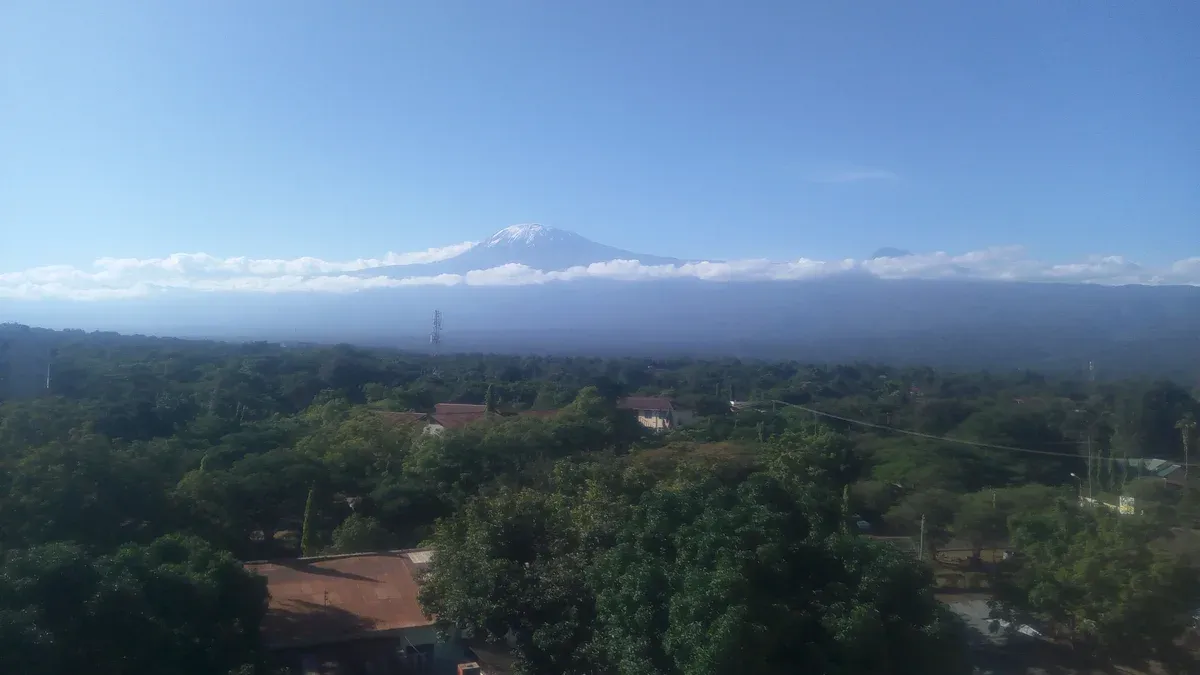
Kilimanjaro from Moshi town. Photo: Prosper Phissoo, CC BY-SA 4.0, via Wikimedia Commons
Quick answer Moshi at a glance
Moshi Tanzania is a town of 221,733 residents in the 2022 census that sits on the lower slopes of Kilimanjaro between 700 m and 950 m, and it is where many Kilimanjaro climbing tours start.
Key takeaways
- Several route climbs include two hotel nights before and after the mountain. See the Marangu Route 5 Days with its Springlands Hotel base in Moshi.
- If you only have one day, a Kilimanjaro day hike to Mandara Hut leaves from Moshi.
- Compare every route and price in the comparison table on the homepage of this independent guide to Kilimanjaro climbing tours.
Why Climbs Start in Moshi
Moshi is the capital and largest city of the Kilimanjaro Region and sits on the lower slopes of the mountain, which makes it the natural staging point for treks.
What and Where Moshi Is
Moshi is the capital and largest city of the Kilimanjaro Region and lies on the lower slopes of Mount Kilimanjaro. It covers about 59 km2, which Wikipedia calls the smallest municipality in Tanzania by area, with a density of about 3,409 people per km2. The elevation ranges from 700 m to 950 m. The 2022 census counted 221,733 residents. The Germans founded a military camp there in 1892, the town status came in 1956 and municipality status in 1988. The northern railway reached Moshi in 1912. Arabica coffee arrived with Roman Catholic missionaries in 1893, and the Kilimanjaro Native Co-operative Union, founded in 1929, still collects from 96 village societies and over 150,000 small farmers, handling about 5,250 tons or roughly 11 percent of national coffee.
Climbs start here because the town sits at the foot of the mountain, about an hour by road from several of the park gates. Kilimanjaro National Park headquarters at Marangu is about 44 km from Moshi and 86 km from Kilimanjaro International Airport (JRO) according to Wikipedia. Flights land at JRO, which Wikipedia places about 40 km from Moshi along the Moshi-Arusha Highway. The Kilimanjaro airport page covers the airport in detail.
| From Moshi to | Distance or time | Source |
|---|---|---|
| Kilimanjaro International Airport (JRO) | About 40 km along the Moshi-Arusha Highway | Wikipedia |
| Arusha | No direct figure in the sources. JRO sits about 60 km east of Arusha | Wikipedia |
| Marangu Gate (park headquarters) | About 44 km, drive of about one hour | Wikipedia and Footslopes Tours |
| Machame Gate | Drive of about 45 to 50 minutes | Operator listings via WeTravel |
| Londorossi Gate | Drive of 3 to 4 hours | Footslopes Tours |
| Rongai side gate | Drive of 3 to 4 hours | Footslopes Tours |
Climbs That Include Moshi Hotel Nights
The listings on this site name two hotels as climb bases without prices on this page. Zara Tours uses the Springlands Hotel in Moshi for pre- and post-climb nights on its Marangu and Machame departures, with airport transfers included. Altezza Travel includes two nights at the Aishi Machame Hotel on its climbs and states a hotel check-out time of 11:00 AM.
Three examples show how it works. The Marangu Route 5 Days from Zara Tours costs $2,402.60 per person and starts at the Springlands Hotel with transfers to and from JRO. The Machame Route 6 Days from the same operator costs $2,350 per person and also beds down at the Springlands. The Lemosho Route 7 Days from Altezza Travel costs $3,959 per person and includes the Aishi Machame Hotel nights and airport pickups in the price.
Not every listing includes hotel nights. The budget Marangu climb on its card at $1,350 per person states that a hotel night in Moshi is not included, so you budget the arrival night yourself. Read the inclusions before you book. Altezza Travel notes that hotel lunches and dinners in town average about $15 (US$15) per person, and the Lemosho Route 7 Days listing leaves them out of the price.
- Springlands Hotel: Zara Tours base for the Marangu and Machame departures, transfers included
- Aishi Machame Hotel: Altezza Travel base with a stated 11:00 AM check-out
- Hotel lunches and dinners in Moshi average about $15 (US$15) per person per Altezza Travel
Money, Safety and the Weather in Town
Practical facts about Moshi from official travel advice and market sources, so you know what to carry and what to avoid.
Money and ATMs
SafariFind says ATMs are common in Moshi, Arusha and Dar es Salaam but that machines can be out of order or charge high fees, so carrying cash is the advice. Tanzania's 2025 foreign-currency rules require domestic goods and services to be priced and paid in shillings, with card payments still allowed, according to SafariFind. The same source advises carrying US dollar notes printed in 2009 or later as a backup because older bills are often refused.
Altezza Travel's figure of about $15 (US$15) per person for hotel lunches and dinners is a rough guide to eating at the hotel.
Safety Advice
The UK Foreign Office warns of a risk of armed robbery throughout Tanzania and of bag snatchers working from cars and motorbikes, and advises against walking alone or at night. It says terrorist attacks cannot be ruled out and that Al-Shabaab-linked extremists are thought to be active. The 2025 general election was followed by protests and a security response that caused fatalities, and the advice is to stay away from crowds. For trekkers specifically, the UK Foreign Office says to use a reputable company, keep to established routes and always walk in groups.
Roads carry their own risk. The UK Foreign Office says accidents causing death and serious injury are common on Tanzanian roads and advises against driving outside major towns at night. On health, it says medical facilities are limited outside Dar es Salaam, gives 112 as the ambulance number and says insurance must cover medical evacuation. The US CDC says malaria is transmitted in all areas of Tanzania below 1,800 m (5,900 ft), which includes Moshi itself, so ask a travel clinic about prophylaxis before you fly.
Weather in Town
Moshi's daytime highs exceed 30 °C from October to March and fall to 25 to 26 °C from May to August, with nights averaging 15 to 17 °C all year, per Wikipedia. Annual rainfall is about 524 mm, and March to May brings about 71 percent of it. The UK Foreign Office says the rains run from late March to May and from October to mid-December, and warns that wildfires can occur in hot dry weather, including inside Kilimanjaro National Park.
Pack for hot days in town and cold nights on the mountain, since summit conditions are a different climate from the streets of Moshi.
A Spare Day in Moshi
Things to do in Moshi before or after a climb, with the day hikes that use the town as their start point.
Materuni Waterfalls and Coffee
Materuni village is about 15 km from Moshi according to the operator of the same name, and it borders Kilimanjaro National Park. The village sits between about 1,600 m and 1,800 m above sea level and the waterfall walk takes 40 to 45 minutes. On the height, the operator says the waterfall is more than 80 m high while tour listings quote 90 m, so read it as 80 to 90 m.
Materuni quotes a tour price of $80 (US$80) for one person falling to $35 (US$35) each for groups of eleven or more, which includes the village entry fee, the hike, a coffee demonstration and lunch. Coffee has history here. Arabica was introduced around Moshi by missionaries in 1893 and the Chagga grow it on terraced fields alongside bananas, the staple crop.
Kikuletwa Hot Springs
SafariFind places the Kikuletwa, also called Chemka, hot springs about 40 km from Moshi with a 1 to 1.5 hour drive, and says guided day trips from Moshi cost $60 to $150 (US$60 to US$150) per person. On the entry fee there is no verified official figure. SafariFind lists $15 (US$15) while BornWild says TZS 10,000, so ask your operator what applies on the day.
Day Hikes on Kilimanjaro Itself
If you want a taste of the mountain without a multiday trek, two guided day hikes leave from Moshi. The Kilimanjaro Day Hike from Kilinge Adventures costs $100 per person and runs 10 hours to Mandara Hut at 2,743 m (9,000 ft), with a guide, lunch and bottled water. The drive from Moshi to Marangu Gate takes about an hour and the gate sits at about 1,800 m to 1,860 m depending on the operator quoted. The catch is honest: the listing states that the Kilimanjaro park entry fee is not included and does not state its amount, so ask the operator what it costs on your date.
The Kilimanjaro Day Trek costs $86 per person and runs about 12 hours with a choice of the Marangu, Machame or Lemosho gate. Here the listing does state the fee: a park fee of $85 (USD 85) per person, paid by card at the gate, and one reviewer reports being asked to pay it again for a stay in the park after 5:00 PM. For context, the TANAPA tariff 2023-2026 booklet sets the Kilimanjaro conservation fee at $70 (US$70) per person per day plus 18 percent VAT. A third option is the 3-day trek to Horombo Hut at $850 per person, which sleeps in mountain huts at 3,720 m and does not attempt the summit, with park fees and rescue fees included in that price.
Sources: Wikipedia, SafariFind, Materuni, TANAPA tariff
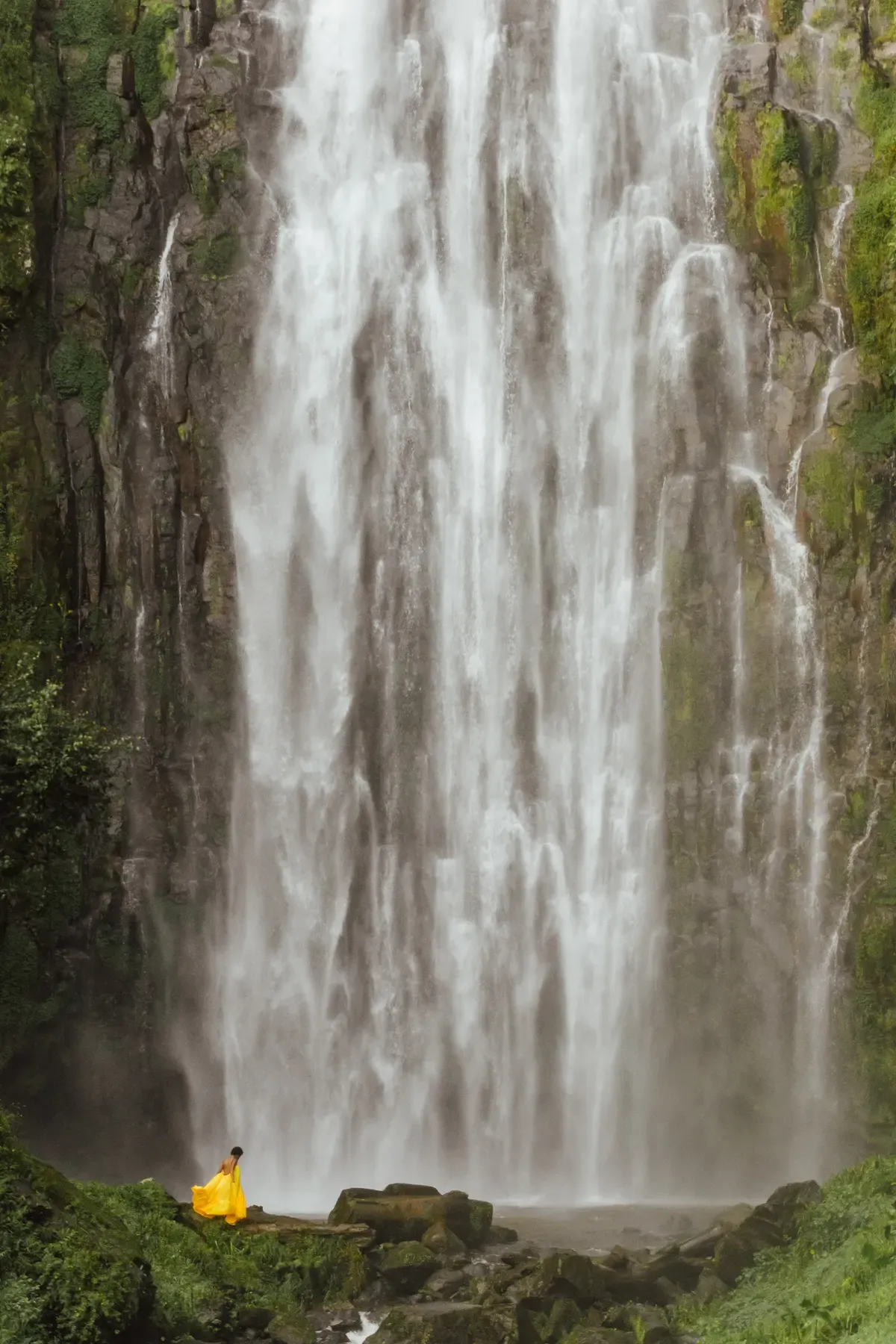
The Materuni waterfall. Photo: Daniel Msirikale, CC BY-SA 4.0, via Wikimedia Commons
Tips for Time in Moshi
Do
- Do carry cash because SafariFind says ATMs in Moshi can be out of order or charge high fees.
- Do check that your insurance covers medical evacuation, because the UK Foreign Office says medical facilities are limited outside Dar es Salaam.
- Do use a reputable trekking company and keep to established routes, because that is the explicit UK Foreign Office advice for trekkers.
- Do bring US dollar notes printed in 2009 or later as a backup, because SafariFind says older bills are often refused.
- Do plan indoor or early activities from March to May, because about 71 percent of Moshi's roughly 524 mm of yearly rain falls then.
Don't
- Don't walk alone or at night in town, because the UK Foreign Office warns of armed robbery risk and bag snatchers working from cars and motorbikes.
- Don't drive outside major towns after dark, because the UK Foreign Office says accidents causing death and serious injury are common on Tanzanian roads.
- Don't join crowds during periods of political tension, because the UK Foreign Office advises staying away from crowds after the unrest that followed the 2025 general election.
- Don't assume your day hike price covers the park fee, because the $100 day hike listing excludes it and states no amount.
Where to Stay in Moshi and Arusha
Each link opens the live room list for that place on the booking site, with today's prices. Several climbs in the catalog include two hotel nights in Moshi, so check your package before you add a room.
Moshi town
- Suits
- The usual base for the nights before and after a climb
Most climbs here pick up from Moshi, about an hour by road from the Marangu and Machame gates as Footslopes Tours puts it.
See stays in Moshi townArusha
- Suits
- A base when the climb starts on the west side or a safari follows
Arusha is the town for the northern safari parks, and some climbs in the catalog start there.
See stays in ArushaMoshi Tanzania: Questions
Is it safe to walk around Moshi?
Take the usual care. The UK Foreign Office warns of armed robbery risk throughout Tanzania and advises against walking alone or at night, and road accidents outside major towns are common. See the safety section above.
Is Moshi worth visiting?
Yes if you are climbing or hiking. Moshi is the base for Kilimanjaro treks and for day hikes such as the Kilimanjaro Day Hike to Mandara Hut, plus Materuni waterfalls and coffee tours nearby.
Can you see Kilimanjaro from Moshi?
Moshi lies on the lower slopes of the mountain between 700 m and 950 m, so the massif is close by, though no source promises a view on any given day. Cloud and haze decide that. Route options are compared in the routes compared on the homepage.
What is the difference between Moshi and Kilimanjaro?
Kilimanjaro is the mountain and also the name of the region. Moshi is the capital and largest city of that region, with 221,733 residents in the 2022 census, and it is where climbs are staged. Start with climbing Mount Kilimanjaro.
How do I get to Moshi from the airport?
Kilimanjaro International Airport (JRO) sits about 40 km from Moshi along the Moshi-Arusha Highway per Wikipedia, and climb operators such as Altezza Travel and Habari Adventure meet guests at arrivals and transfer them to their hotels. Flight and transfer details are on the Kilimanjaro airport page.
Where do climbers sleep in Moshi?
The listings name two hotels. Zara Tours bases its Marangu and Machame climbs at the Springlands Hotel, and Altezza Travel includes two nights at the Aishi Machame Hotel with an 11:00 AM check-out. Compare packages in the comparison table.